
Introduction: Seven Fighting Styles, Seven Cultural Traditions
Top Martial Art Styles represent much more than physical combat. They reflect centuries of discipline, cultural development, physical training, strategy, and personal development. Around the world, Top Martial Art Styles have evolved according to local traditions, environments, and communities. From Southeast Asian movement systems to Japanese discipline and Brazilian grappling, Top Martial Art Styles offer a fascinating way to explore the connection between culture and combat.
This guide explores seven fighting styles from different parts of the world: Silat from Indonesia, Filipino Martial Arts, Karate from Japan, Kung Fu from China, Taekwondo from Korea, Muay Thai from Thailand, and Brazilian Jiu-Jitsu from Brazil. Each style has its own philosophy, techniques, training methods, and historical development.
Martial arts can be practiced for many different reasons, including fitness, competition, self-defense, discipline, coordination, and cultural learning. Understanding these differences makes it easier to appreciate the diversity of Martial Art Styles around the world.
1. Southeast Asian Foundations and Fluid Movement
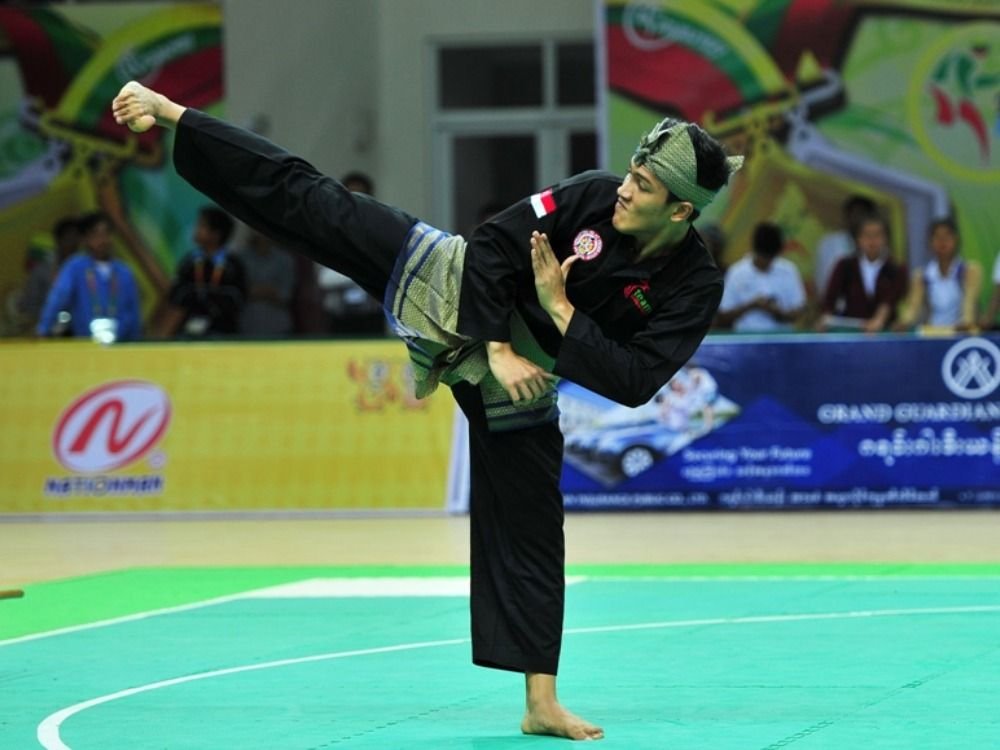
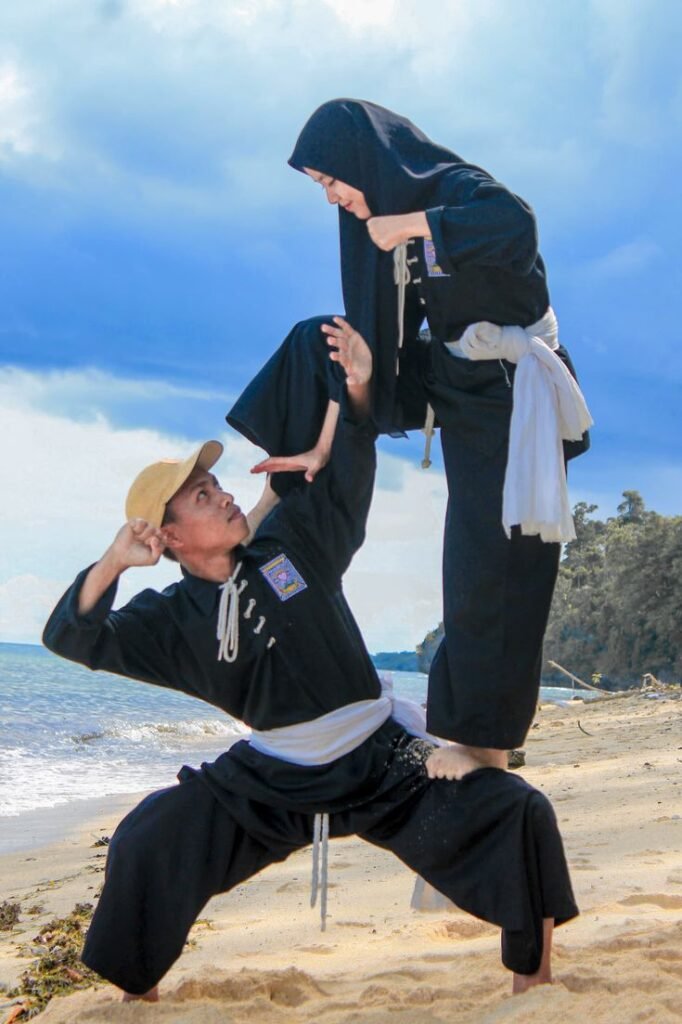
Silat from Indonesia deserves a prominent place in any discussion of global martial arts. Silat refers to a broad family of traditional fighting systems found across parts of Southeast Asia, with Indonesia being particularly associated with numerous Silat traditions. Different regions and communities have developed their own approaches, movements, training methods, and cultural practices.
Silat often emphasizes fluid movement, balance, positioning, evasive actions, striking, sweeping, throwing, and close-range techniques. Depending on the particular system, training can also involve traditional weapons. The movements may appear smooth and artistic, but they are based on controlled body positioning and practical movement.
The wider category of Indonesian Martial Arts includes several traditions connected with local communities and historical practices. Silat has also influenced cultural performances and demonstrations, making it more than simply a physical training system.
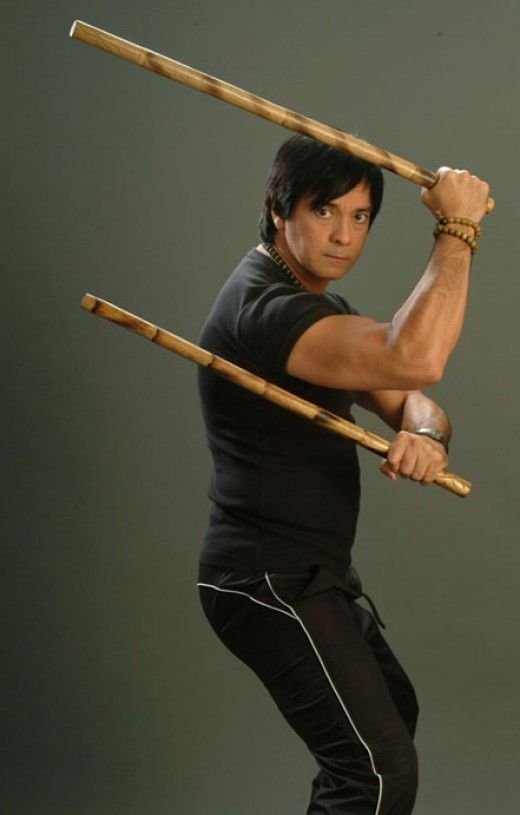
Filipino Martial Arts provide another important Southeast Asian perspective. Filipino systems such as Arnis, Eskrima, and Kali are particularly known for weapon-based training involving sticks, blades, and other training tools, while also teaching empty-hand techniques.
These systems demonstrate how regional environments and historical experiences influenced the development of martial traditions. When studying Different Martial Arts, Southeast Asian systems provide valuable examples of movement, adaptability, timing, and coordination.
2. Japanese Traditions of Discipline and Control
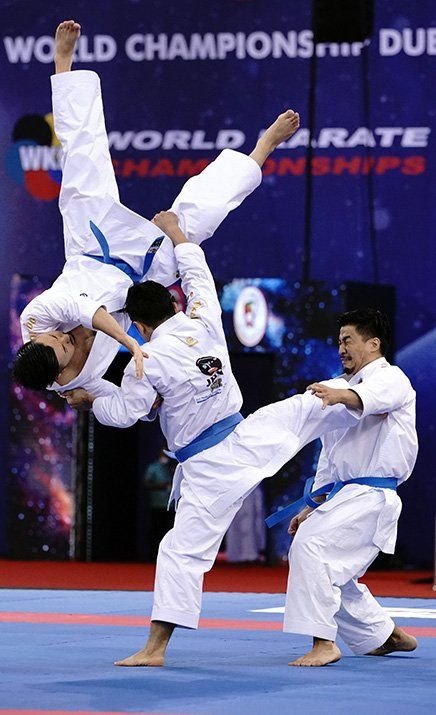
Japan has produced several influential martial traditions, each with its own approach to training and technique. Karate from Japan is widely practiced internationally and is commonly associated with punches, kicks, blocks, stances, combinations, and structured forms.
Karate training often includes basic techniques, kata, and controlled partner practice. Kata are organized sequences of movements that allow practitioners to develop balance, coordination, timing, precision, and body control.
Another important Japanese tradition is Judo from Japan. Rather than focusing primarily on striking, Judo emphasizes throws, grappling, balance breaking, pins, and controlled ground techniques. The ability to use positioning and leverage is central to its practice.
Aikido from Japan takes a different approach, emphasizing movement, balance, control, and techniques that redirect an opponent’s force. Training often involves throws, joint-control movements, and coordinated footwork.
Together, these systems demonstrate why the Types of Martial Arts cannot be understood through a single approach. Japanese traditions include striking, throwing, grappling, movement, and controlled defensive techniques.
The development of these systems also forms an important part of Martial Arts History, particularly in understanding how older fighting traditions evolved into organized modern martial arts.
3. Chinese Heritage and the Art of Movement
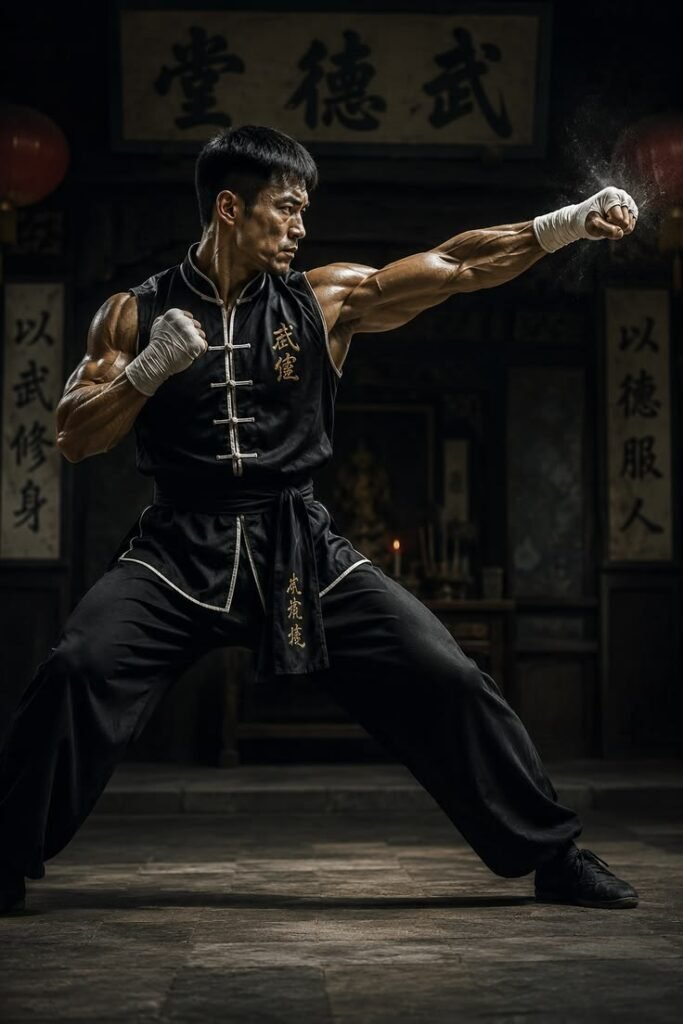
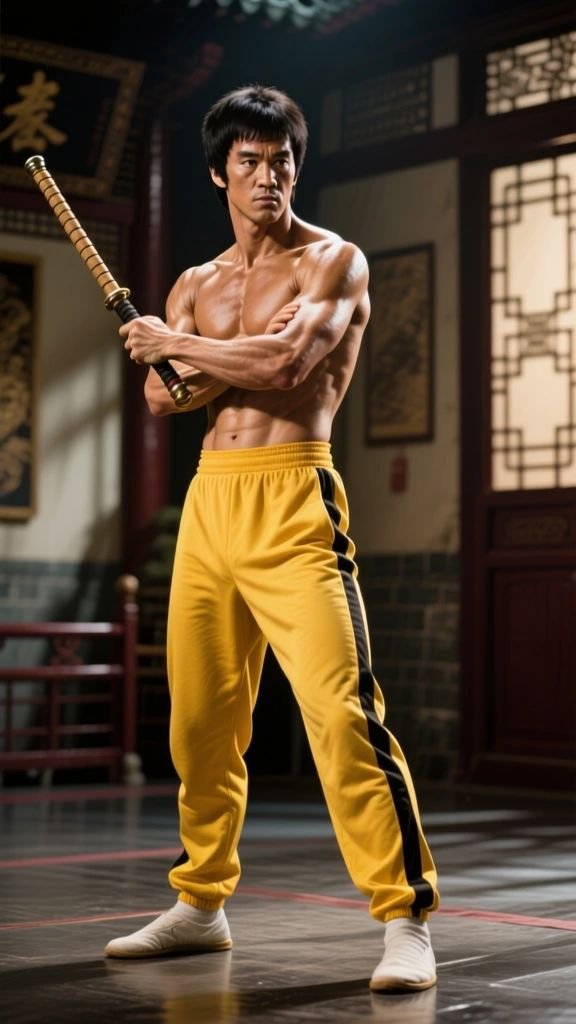
Kung Fu from China represents a broad collection of Chinese martial traditions rather than one single fighting system. Different schools and lineages may emphasize different techniques, movements, philosophies, and training methods.
Some Chinese systems focus on striking and footwork, while others incorporate throws, joint techniques, defensive movements, forms, and traditional weapons. Styles can vary considerably depending on their regional and historical background.
A major feature associated with many Chinese martial traditions is the practice of forms. These structured sequences can develop coordination, balance, flexibility, timing, and movement control.
Chinese martial traditions have also influenced international popular culture through cinema, demonstrations, competitions, and martial arts education. However, the real depth of Kung Fu goes beyond entertainment. Many traditional systems preserve knowledge passed through generations.
The diversity of Kung Fu illustrates how Traditional Martial Arts can develop into numerous branches while maintaining connections to their cultural origins. It also shows why studying Traditional Fighting Styles requires an understanding of history, community, and training practices rather than looking only at individual techniques.
4. Korean Precision and Dynamic Techniques
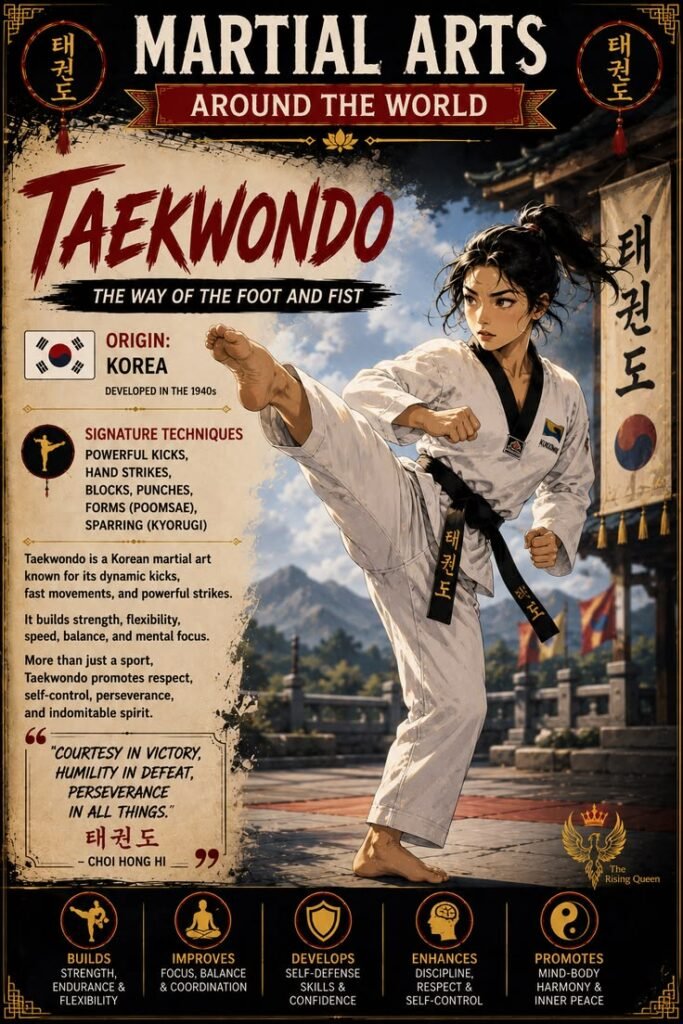
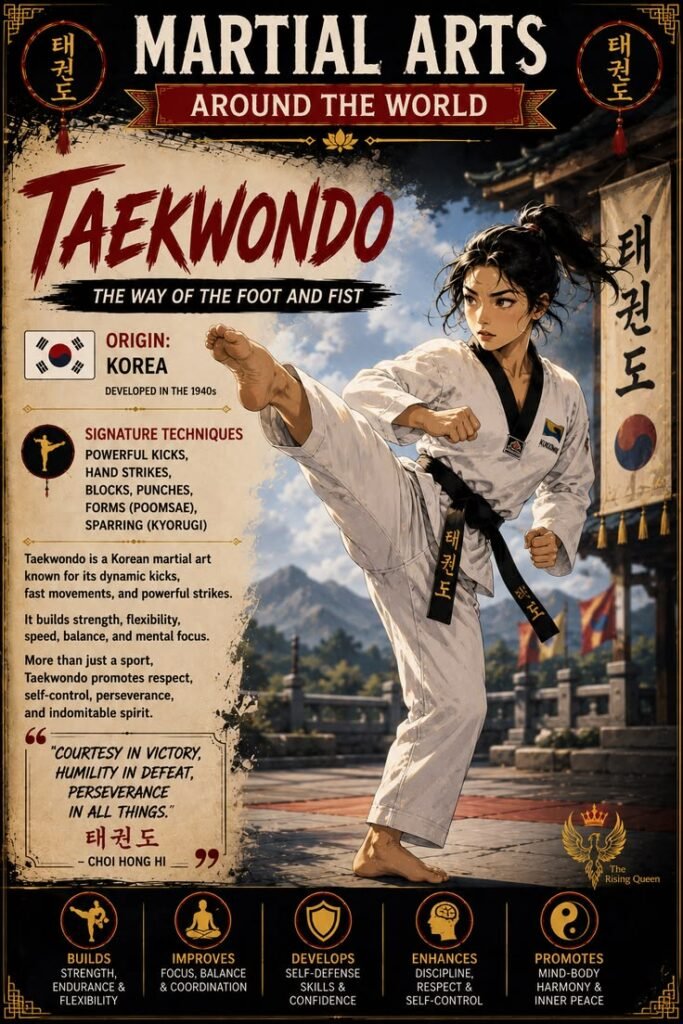
Taekwondo from Korea is one of the most internationally recognized Korean martial arts. It is particularly known for dynamic kicking techniques, fast movements, controlled strikes, footwork, and athletic training.
Taekwondo practice commonly includes basic techniques, forms, controlled sparring, physical conditioning, and flexibility training. Its kicking techniques can involve speed, balance, precision, and considerable range of motion.
Modern Taekwondo has developed both traditional and competitive approaches. International competition has helped spread the art around the world, while many schools continue to incorporate traditional elements into their training.
The development of Taekwondo also provides an interesting example of how a martial tradition can become an international sport while maintaining connections to its country of origin.
Among the many Martial Art Styles, Taekwondo demonstrates the importance of athletic movement and specialized technique. Its emphasis on kicking also gives it a distinctive identity compared with systems that focus more heavily on hand strikes or grappling.
5. Thai Combat Tradition and Physical Conditioning
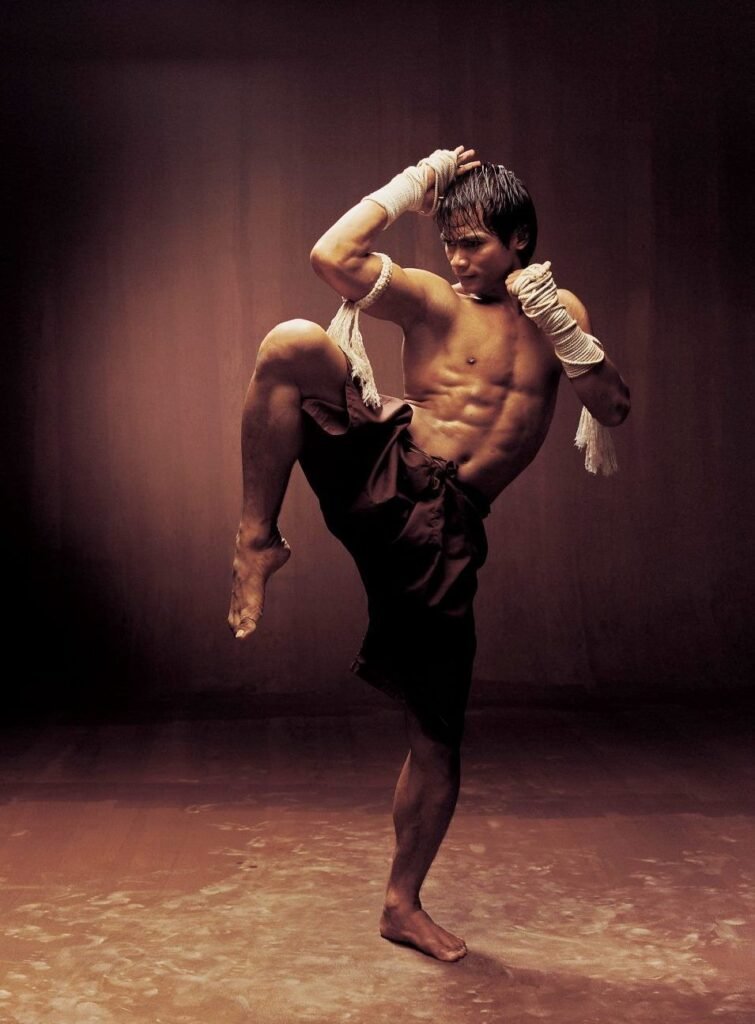
Muay Thai from Thailand is widely recognized for its striking techniques and demanding physical conditioning. It is commonly associated with punches, kicks, knees, elbows, footwork, and close-range clinch work.
Muay Thai training often combines technical practice with conditioning exercises. Practitioners may work on pads, bags, partner drills, movement, timing, and controlled sparring.
The style has a long cultural history in Thailand and has developed into a globally practiced combat sport. Traditional elements remain important to its identity, while modern gyms around the world teach Muay Thai for sport, fitness, and martial arts training.
Its distinctive combination of striking methods makes Muay Thai an important subject when exploring Martial Arts Techniques. It also demonstrates how a traditional fighting system can develop into an internationally recognized sporting discipline.
The physical demands of training can involve cardiovascular conditioning, coordination, balance, timing, and muscular endurance. These characteristics have helped Muay Thai attract practitioners beyond competitive fighting.
6. Brazilian Grappling and Ground Control
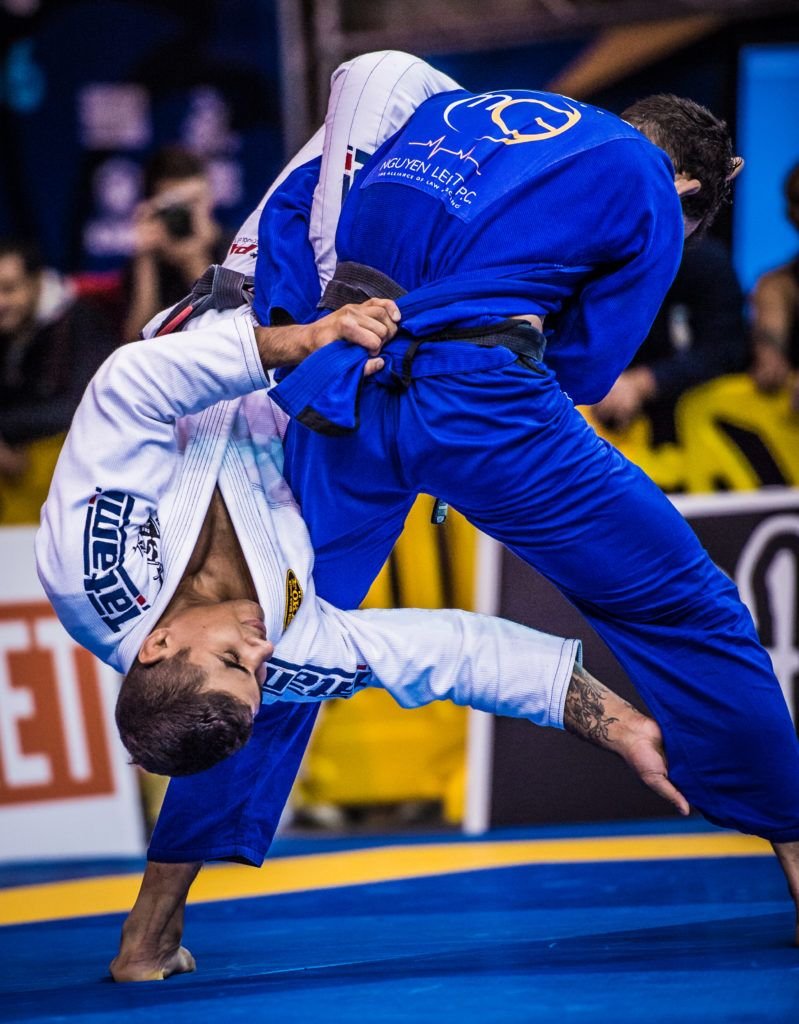
Brazilian Jiu-Jitsu from Brazil developed from grappling traditions and became particularly known for ground fighting, positional control, submissions, escapes, and leverage.
Unlike systems that primarily emphasize striking, Brazilian Jiu-Jitsu focuses heavily on grappling. Practitioners learn how to control positions, improve leverage, escape difficult situations, and apply various submission techniques within a controlled training environment.
The development of Brazilian Jiu-Jitsu is an important chapter in modern Martial Arts History. Its international growth has introduced many people to grappling-based training and has contributed to the wider popularity of submission-focused martial arts.
Brazilian Jiu-Jitsu also demonstrates how size and strength can be approached through positioning, technique, timing, and leverage. Training commonly involves drilling techniques with partners and practicing them through controlled sparring, often called rolling.
When comparing Different Martial Arts, Brazilian Jiu-Jitsu provides a useful contrast to striking-focused systems such as Boxing and Muay Thai. Instead of concentrating primarily on punches and kicks, its training revolves around grappling positions and ground control.
Lorem ipsum dolor sit amet, consectetur adipiscing elit. Ut elit tellus, luctus nec ullamcorper mattis, pulvinar dapibus leo.
7. Boxing and the Evolution of Modern Combat Sports
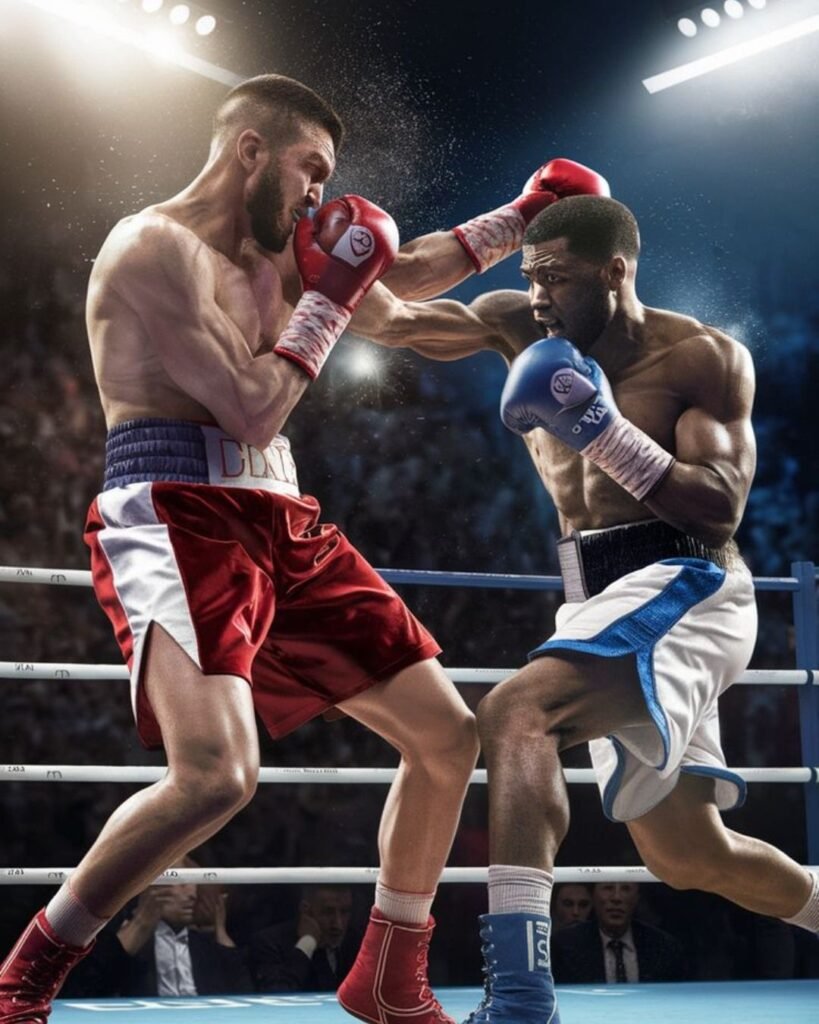
Boxing is one of the world’s most widely recognized combat sports and offers a different approach from many traditional martial arts. It primarily focuses on punches, footwork, defensive movement, timing, distance, and combinations. Boxers develop their skills through technical drills, pad work, heavy-bag training, conditioning, and controlled sparring.
Like many Martial Art Styles, boxing requires discipline, concentration, coordination, and consistent practice. Its training places strong emphasis on movement and reaction, with practitioners learning how to attack and defend while maintaining balance and positioning.
When compared with Different Martial Arts, boxing provides an interesting contrast. Silat may incorporate fluid movement and varied techniques, Judo emphasizes throws and grappling, while Taekwondo is particularly known for kicking techniques. Muay Thai combines punches, kicks, knees, elbows, and clinch work, whereas Brazilian Jiu-Jitsu focuses heavily on grappling and ground control.
Boxing also has an important place in Martial Arts History and modern combat-sports culture. Although boxing is generally classified as a combat sport rather than a traditional martial art, its techniques and training methods are frequently studied alongside other Types of Martial Arts.
The comparison between boxing and Traditional Martial Arts shows how different systems can develop specialized skills while sharing common principles such as timing, balance, movement, conditioning, and discipline. This variety is what makes the world of combat sports and martial arts so diverse and interesting.
Conclusion
The Top Martial Art Styles explored here demonstrate how fighting traditions can become expressions of history, culture, discipline, movement, and athletic development. Silat from Indonesia and Filipino Martial Arts highlight Southeast Asian diversity, while Karate, Judo, and Aikido represent different Japanese approaches. Kung Fu reflects China’s extensive martial heritage, Taekwondo showcases Korean kicking traditions, Muay Thai represents Thailand’s distinctive striking system, and Brazilian Jiu-Jitsu demonstrates the effectiveness and complexity of grappling.
Studying these Traditional Martial Arts is not simply about comparing fighting techniques. It is also an opportunity to understand the cultures, histories, training philosophies, and communities that shaped them. Each system offers a different perspective on movement, discipline, coordination, and martial practice.