Evil Eye

Evil Eye: Understanding Its Meaning, Signs, Causes and Protection

Evil Eye is a belief found in many cultures and communities around the world. It is commonly associated with the idea that harmful envy, jealousy, or an intense negative gaze may cause difficulties or misfortune for another person. Evil Eye is understood differently depending on religious, cultural, and personal beliefs. Some people connect it with spiritual harm, while others view it mainly as a traditional cultural belief. Evil Eye therefore deserves to be discussed carefully by separating religious teachings from cultural interpretations.

Protection from Evil Eye generally means taking spiritual, religious, or culturally accepted steps that a person believes can help protect them from perceived negative influence. In the Islamic tradition, protection is sought from Allah through Qur’an recitation, supplication, remembrance, and legitimate Ruqyah.

The phrase evil powers can refer broadly to beliefs about supernatural or spiritual forces considered harmful. However, different religions and cultures understand such ideas in very different ways. This article therefore looks at the subject from both Muslim and non-Muslim perspectives without presenting cultural beliefs as established scientific facts.


1. Understanding the Concept Across Cultures

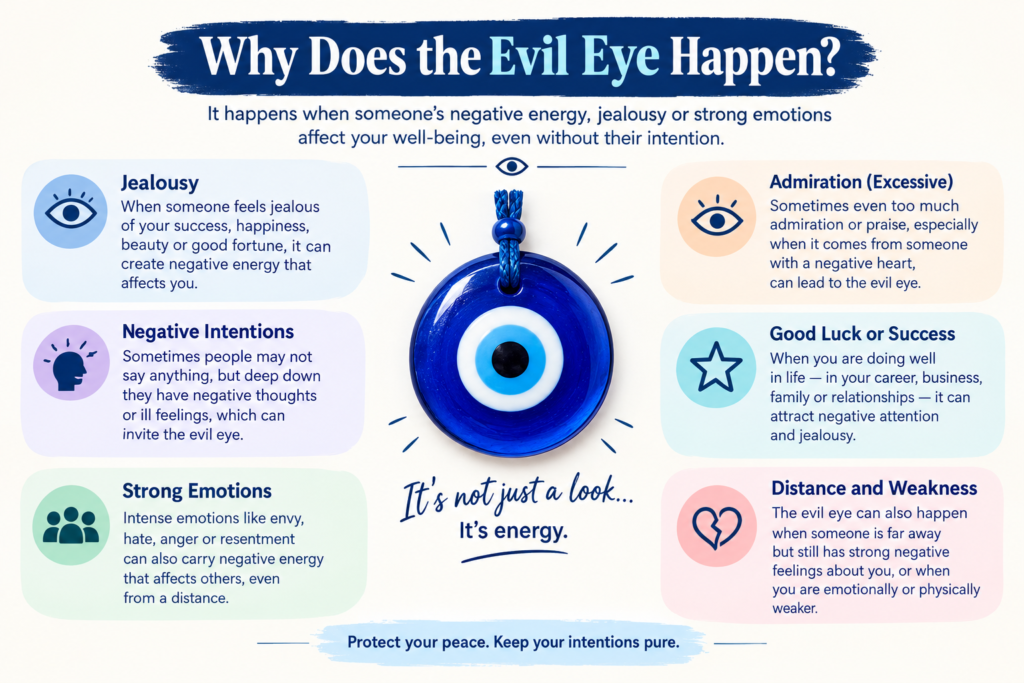
The belief in the Evil Eye has existed in different forms across various societies. In many traditions, it is connected with jealousy, excessive admiration, resentment, or a harmful intention directed toward another person.

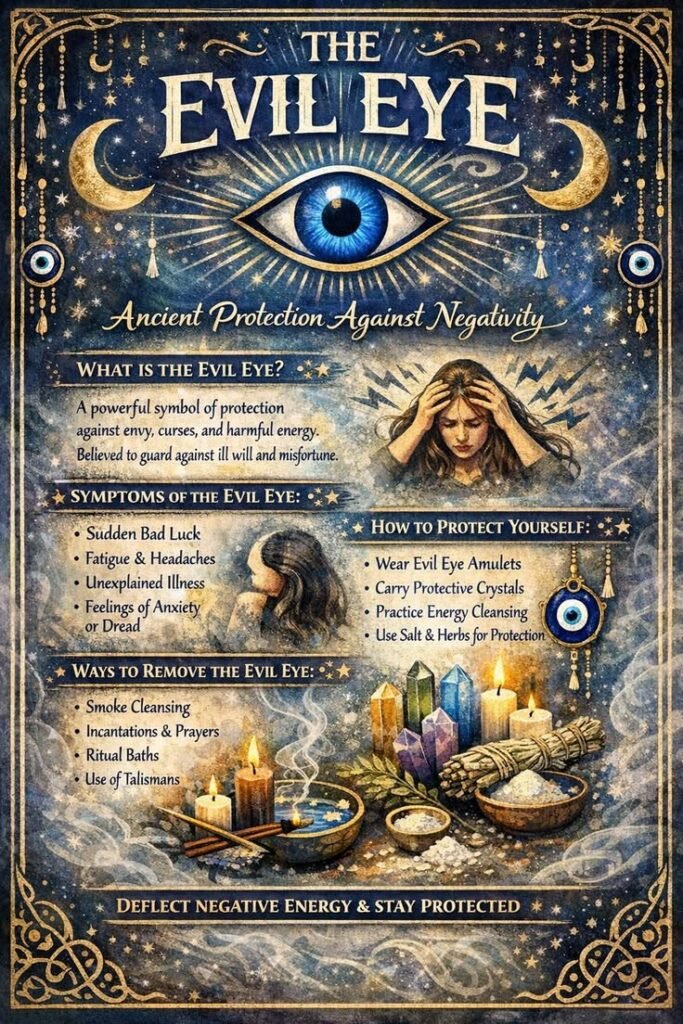
The concept is sometimes represented through symbols, jewelry, charms, prayers, or traditional rituals. These practices vary greatly from one culture to another.

It is important to distinguish between belief and scientific evidence. There is no established scientific method for diagnosing an Evil Eye, and ordinary problems such as tiredness, illness, financial difficulties, anxiety, or relationship problems can have many ordinary explanations.

For this reason, someone experiencing physical or psychological symptoms should not automatically assume they are caused by an Evil Eye. Appropriate professional or medical help should still be considered when necessary.


Evil Eye

2. What the Islamic Tradition Teaches

From a Muslim perspective, the subject has a specific religious context. The Arabic term commonly associated with the Evil Eye is al-‘ayn, and authentic Islamic sources affirm that the Evil Eye is real.

Sahih al-Bukhari records the statement of the Prophet Muhammad ﷺ that the effect of the Evil Eye is a fact.

Islamic teachings also connect protection with turning toward Allah rather than becoming excessively fearful of other people. Qur’an recitation, dua, dhikr, and legitimate Ruqyah are among the practices discussed in Islamic sources concerning protection.

Surah Al-Falaq is particularly relevant because it includes seeking refuge in Allah from the evil of the envier when they envy.

A hadith recorded in Muwatta Malik also reports that the Prophet ﷺ instructed people to seek Ruqyah for children who were believed to have been affected.


Evil Eye

3. Recognizing Commonly Discussed Signs

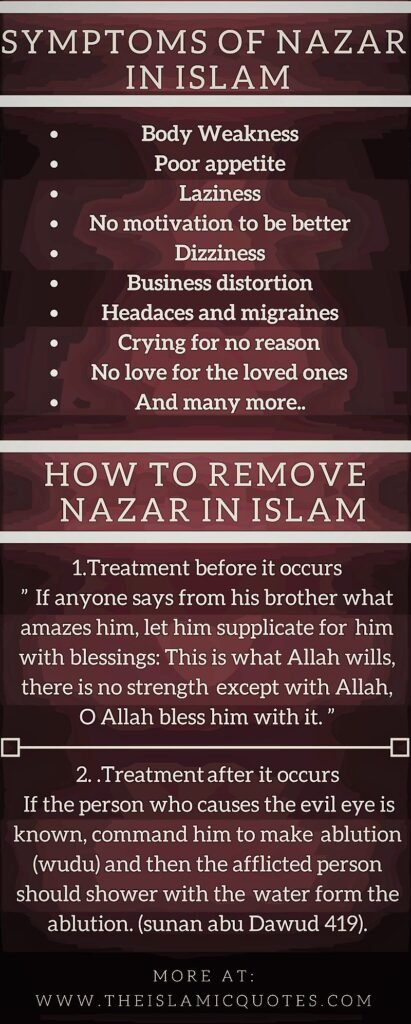
Evil Eye Signs are interpreted differently by different communities. People sometimes associate sudden tiredness, unexplained discomfort, emotional changes, loss of motivation, family difficulties, or unexpected setbacks with the Evil Eye.

However, these should not automatically be considered proof of an Evil Eye. Many of these experiences can have medical, psychological, social, financial, or environmental explanations.

From an Islamic perspective, a person should avoid becoming obsessed with identifying who may have caused harm. Islam encourages seeking Allah’s protection and maintaining trust in Him rather than constantly suspecting other people.

Similarly, non-Muslim cultural traditions may have their own interpretations of signs, but these interpretations should be understood as beliefs rather than established medical diagnoses.

If someone has persistent physical symptoms, sleep problems, depression, anxiety, or other health concerns, seeking qualified medical or mental-health advice is important.


Evil Eye

4. Possible Causes and the Role of Envy

Evil Eye Causes are traditionally associated with envy, jealousy, excessive admiration, or an intense gaze. In some cultural beliefs, a person may unintentionally cause harm through admiration without expressing a blessing or protective phrase.

Islamic teachings distinguish between envy and the Evil Eye, although they can be related. A scholarly explanation notes that every person who gives the Evil Eye is considered envious in that context, but not every envious person necessarily gives the Evil Eye.

The Qur’an also teaches believers to seek refuge from the evil of an envier when they envy, in Surah Al-Falaq 113:5.

The important lesson is that people should not turn normal human jealousy into constant suspicion. Healthy relationships require trust, good manners, humility, and avoiding unnecessary boasting.


Evil Eye

Muslim Perspective

5. Protection, Dua and Spiritual Practice

For Muslims, Protection from Evil Eye is fundamentally connected with seeking refuge in Allah. Islamic sources mention Qur’an recitation, remembrance, supplication, and Ruqyah as means of seeking protection.

Among the commonly cited protective recitations are Surah Al-Falaq, Surah An-Nas, Surah Al-Ikhlas, Surah Al-Fatihah, and Ayat al-Kursi, based on Islamic sources discussing protection and Ruqyah.

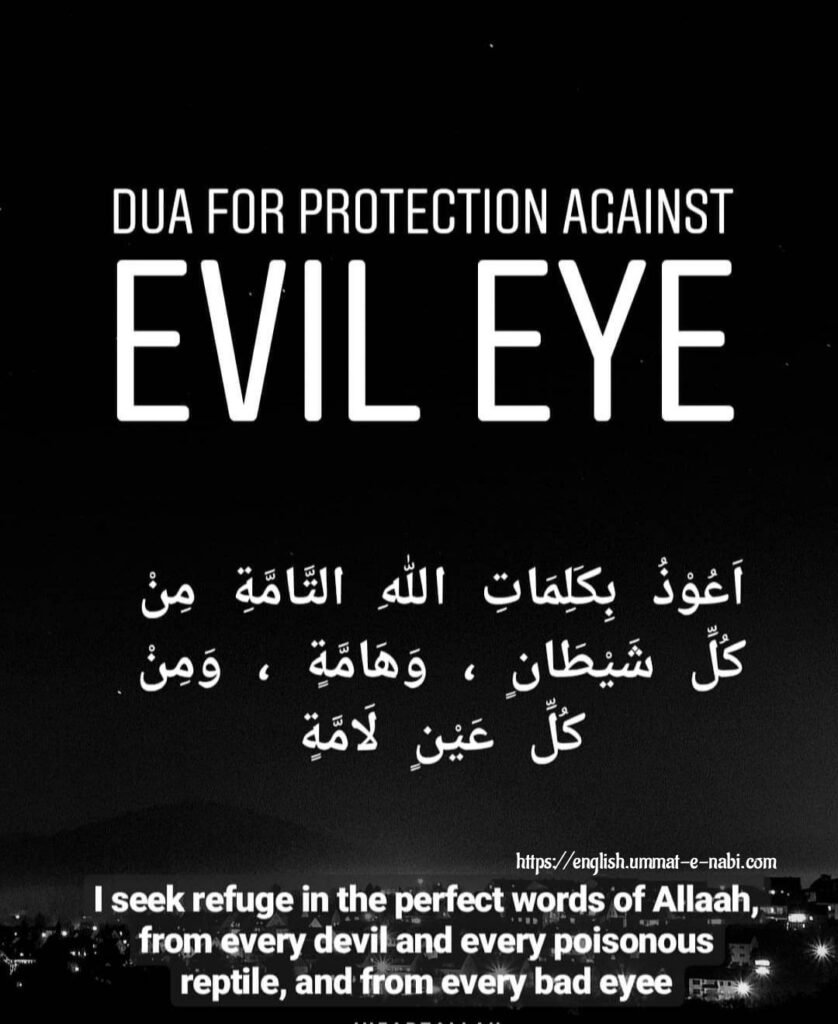
A well-known supplication reported in Sahih Muslim is:

“I seek refuge in the perfect words of Allah from the evil of that which He has created.”

This is cited as a supplication for seeking refuge from harm.

Ruqyah is also mentioned in authentic Islamic sources as a permissible means of treatment and protection for the Evil Eye.

At the same time, Muslims should avoid unverified charms and superstitious practices. Islamic sources specifically warn against relying on amulets as a means of protection.

Evil Eye

Non-Muslim Perspective

6. Cultural Beliefs, Symbols and Traditional Protection

Outside Islam, the Evil Eye appears in many cultural and historical traditions. Different societies have developed their own explanations, symbols, customs, and protective practices.

Some communities use decorative symbols commonly associated with protection, while others rely on prayers, traditional ceremonies, family customs, or spiritual practices.

These traditions should be presented respectfully because the meaning of the Evil Eye differs significantly between cultures. A symbol that represents protection in one society may have a completely different meaning somewhere else.

It is also important to separate cultural tradition from scientific evidence. There is no universally accepted scientific test that can establish whether someone has been affected by an Evil Eye or an evil power.

For a balanced discussion, cultural practices can be explored as part of anthropology, history, religion, and social traditions without claiming that supernatural effects have been scientifically demonstrated.


Evil Eye

7. Finding a Balanced Approach to Protection and Belief

The subject of the Evil Eye combines religion, culture, psychology, tradition, and personal belief. A balanced approach is therefore important.

For Muslims, the safest approach is to follow authentic Islamic teachings: trust Allah, make dua, recite Qur’an, maintain regular adhkar, and use legitimate Ruqyah when appropriate. Islamic sources emphasize seeking refuge in Allah and relying upon Him.

For people from other religious or cultural backgrounds, understanding their own traditions can provide valuable insight into how communities have historically interpreted envy, misfortune, and spiritual protection.

At the same time, people should avoid allowing fear of evil powers to control their everyday lives. Not every problem, illness, failure, or unexpected event has a supernatural explanation.

A thoughtful approach combines spiritual beliefs with practical responsibility. If a person is experiencing health problems, professional medical advice should not be replaced by spiritual or cultural practices. Similarly, emotional or psychological difficulties deserve appropriate support.

Ultimately, the most useful lesson is to maintain humility, avoid unnecessary envy, treat others kindly, and seek appropriate protection according to one’s faith and values.

.

Evil Eye