

Introduction
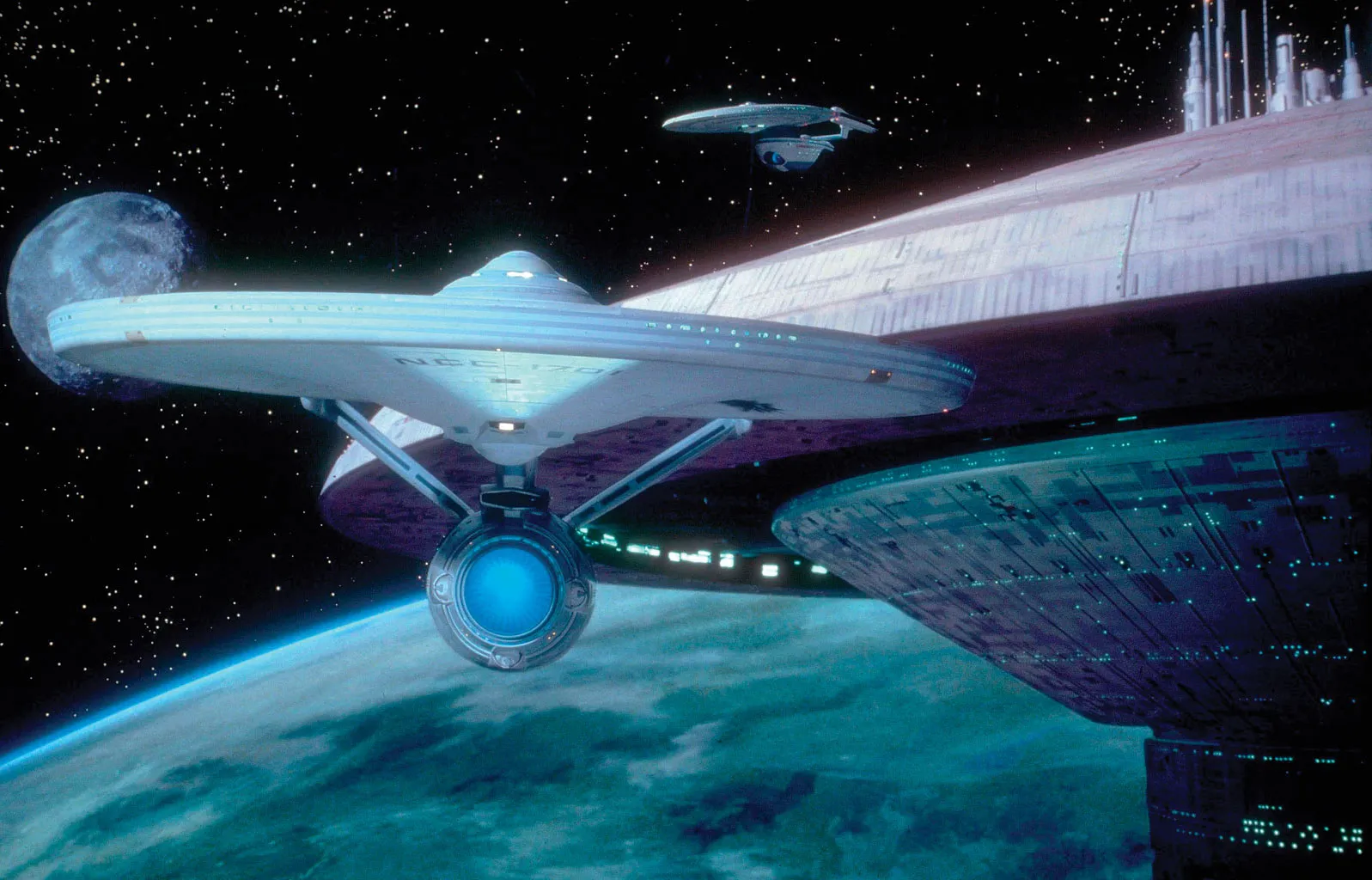
You have probably heard the word sci-fi in movies, books, television shows, video games, and conversations about artificial intelligence. But what does sci-fi actually mean?
Sci-fi is short for science fiction. It is a type of fiction that explores imagined or speculative ideas involving science, technology, future societies, space, advanced machines, and the possible effects of technological change on human life.
From robots and artificial intelligence to space exploration and futuristic cities, sci-fi allows us to imagine possibilities that may seem impossible today.
But sci-fi is not simply about predicting the future. At its best, it asks an important question:
What could happen if science and technology changed the way we live?
What Does Sci-Fi Mean?
Sci-fi means science fiction.
The word is an informal shortened form of “science fiction.” Cambridge defines science fiction as writing about imagined developments in science and their effects on life, especially in the future.
The term is usually associated with stories that explore ideas such as:
- Artificial intelligence
- Robots
- Space travel
- Alien life
- Time travel
- Future technology
- Virtual worlds
- Advanced medicine
- Human-machine interaction
- Future societies
However, sci-fi does not have to be set in the distant future.
A science-fiction story can take place in the present, the past, another planet, an alternate reality, or a completely imagined world.
What makes it sci-fi is usually the way it uses scientific or technological ideas to explore possibilities and their consequences.
What Is the Difference Between Sci-Fi and Science?
This is an important distinction.
Science is the study of the natural world.
Science fiction is imaginative storytelling that uses scientific ideas, technological possibilities, or speculative concepts.
For example, scientists can study whether life might exist on another planet. A science-fiction writer might take that idea and create a story about humans discovering an alien civilization.
The science provides the starting point.
The fiction explores the possibilities.
That is why science fiction can be inspired by real scientific knowledge while still containing fictional ideas.
Why Is Sci-Fi More Than Just Robots and Spaceships?
When people hear “sci-fi,” they often think about robots, spaceships, aliens, and futuristic cities.
Those are certainly common elements, but sci-fi is much broader.
A strong science-fiction story often uses technology to explore human questions.
For example:
- Should humans trust intelligent machines?
- What happens when technology changes employment?
- How much privacy should people give up for convenience?
- What happens if humans become dependent on technology?
- Could machines make decisions better than humans?
- What would happen if humans lived on another planet?
- How would society change if people could live much longer?
These questions make sci-fi more than entertainment.
It becomes a way to think about the relationship between technology, society, and human life.
How Did Science Fiction Develop?
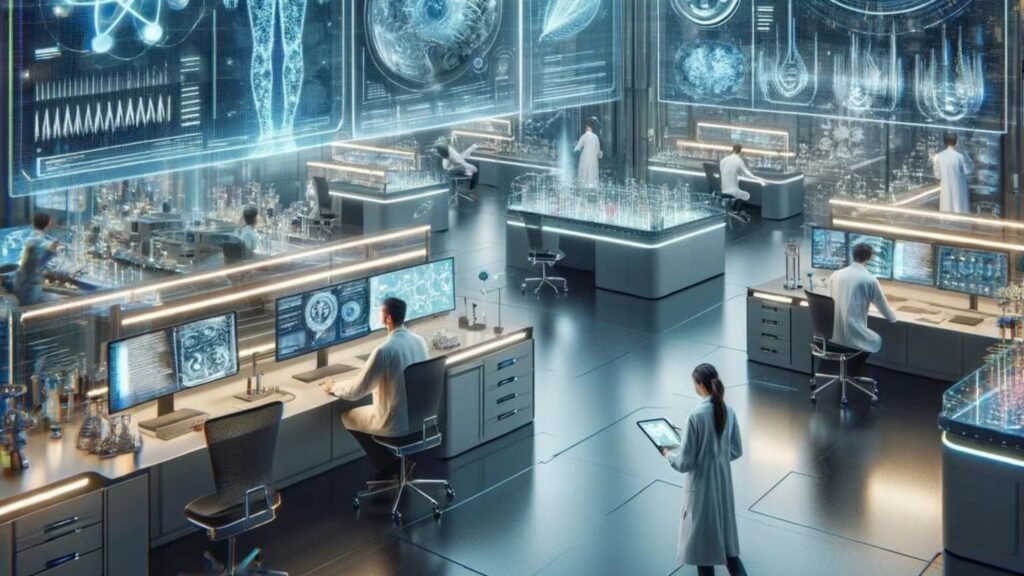
The exact origins of science fiction are debated because earlier stories contained ideas that resemble modern sci-fi.
However, modern science fiction developed alongside major changes in science, industry, and technology. As scientific discoveries and new inventions began changing everyday life, writers increasingly imagined what those developments might mean for the future.
Over time, themes such as space travel, robots, alien life, time travel, and advanced technology became closely associated with science fiction.
The genre continued to develop throughout the 20th century and eventually expanded across books, films, television, comics, games, and other forms of entertainment.
Today, sci-fi continues to evolve because technology itself is changing rapidly.
What Are the Main Types of Sci-Fi?
Science fiction contains many different subgenres. Some focus heavily on scientific ideas, while others concentrate more on society, people, or future possibilities.
1. Artificial Intelligence Sci-Fi
This type of sci-fi focuses on intelligent machines, robots, computer systems, and the relationship between humans and artificial intelligence.
Stories may explore what happens when machines become increasingly capable or appear to understand human behavior.
This is particularly relevant today because artificial intelligence is no longer purely fictional. AI is already being used for research, data analysis, autonomous systems, and many other applications. NASA, for example, uses AI in areas including space missions, satellite data analysis, weather-related work, and autonomous systems.
2. Space Sci-Fi
Space science fiction explores planets, stars, spacecraft, extraterrestrial life, space colonies, and human exploration beyond Earth.
It can combine real astronomy with fictional ideas to imagine what future space exploration might look like.
3. Time-Travel Sci-Fi
Time-travel stories explore the possibility of moving between different points in time.
These stories often raise questions about cause and effect.
For example:
What happens if someone changes the past?
And if the past changes, what happens to the future?
4. Cyberpunk
Cyberpunk often combines advanced technology with large cities, computer networks, powerful corporations, social inequality, and questions about identity.
It usually presents a future where technology is highly advanced but society may still face serious problems.
5. Dystopian Sci-Fi
Dystopian science fiction imagines societies where people experience severe social, political, technological, or environmental problems.
Technology may be presented as a tool that improves life—or as something that creates new forms of control.
6. Post-Apocalyptic Sci-Fi
Post-apocalyptic stories explore what happens after a major disaster or civilization-changing event.
The focus may be on survival, rebuilding society, environmental change, or the consequences of technological and human decisions.
7. Hard Sci-Fi
Hard science fiction places greater emphasis on scientific concepts and technical plausibility.
Writers in this area may spend considerable effort making the scientific aspects of a story consistent with known science.
Other forms of sci-fi may be less concerned with scientific accuracy and more interested in ideas, characters, society, or storytelling.
What Are Common Sci-Fi Examples?
Sci-fi can be found in many forms:
- Novels
- Short stories
- Movies
- Television series
- Video games
- Comics
- Animation
- Audio dramas
Common science-fiction themes include:
Artificial intelligence, robotics, space exploration, alien life, time travel, virtual reality, future technology, human enhancement, and alternative societies.
The genre continues to change as new technologies appear.
Ideas that once seemed extremely futuristic can sometimes become real technologies.
Sci-Fi and Artificial Intelligence
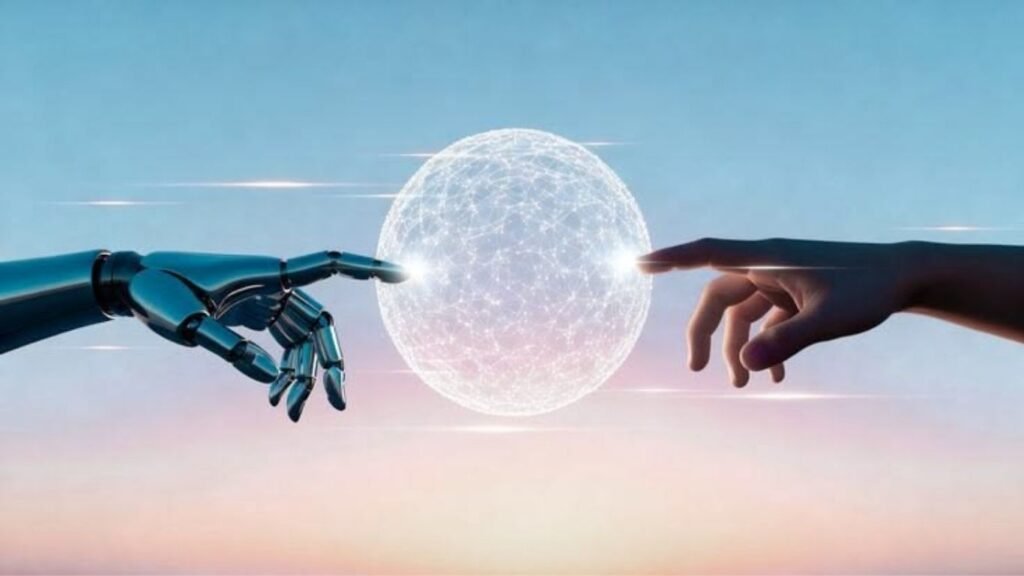
One of the most interesting relationships in modern technology is the connection between science fiction and artificial intelligence.
For decades, science-fiction stories have imagined machines that could communicate with humans, solve complex problems, operate independently, or make decisions.
Today, artificial intelligence is a real field of technology.
Modern AI systems can process large amounts of information, identify patterns, generate content, interact using natural language, and support people in many different tasks.
NASA has been using AI for decades in areas such as mission operations and scientific research, and its current work includes AI applications for spacecraft, satellite imagery, autonomous systems, and space exploration.
This does not mean that today’s AI is the same as fictional AI.
Science fiction often presents machines with human-level intelligence, consciousness, emotions, or complete independence.
Real AI systems have specific capabilities, limitations, training requirements, and operational constraints.
That difference is important.
Sci-fi imagines possibilities.
Science and engineering test what is actually possible.
Has Sci-Fi Inspired Real Technology?
Science fiction and technology have a fascinating relationship.
Writers imagine new possibilities, while scientists and engineers develop technologies based on research, experimentation, and practical constraints.
Sometimes a fictional idea can inspire researchers to think differently about what technology might eventually achieve.
NASA has documented the relationship between AI and science fiction, including the long history of fictional intelligent machines and their connection to ideas about AI in space exploration.
There are also real examples of technologies that once seemed highly futuristic.
NASA’s Deep Space 1 mission, for example, tested an AI system called Remote Agent that could make planning decisions and detect and diagnose spacecraft problems. NASA described the achievement as demonstrating capabilities that had previously seemed like science fiction.
This does not mean that science fiction accurately predicts every invention.
Instead, it shows how imagination and technological development can sometimes meet.
Sci-Fi Does Not Predict the Future Perfectly
It is easy to look at an old science-fiction story and say:
“They predicted the future.”
Sometimes fictional ideas do resemble technologies that later become real.
But science fiction is not a prediction machine.
A writer may imagine a technology for storytelling purposes. Scientists may later discover that part of the idea is possible, impossible, or possible in a completely different way.
The real value of sci-fi is often not predicting exactly what will happen.
Its value is helping people imagine possibilities before they become reality.
That imagination can encourage people to ask better questions about science and technology.
Why Is Sci-Fi Important Today?
Sci-fi is especially interesting today because technology is becoming part of almost every area of life.
Artificial intelligence, robotics, virtual reality, biotechnology, automation, autonomous vehicles, and space technology are developing rapidly.
Some of these technologies would have seemed extremely futuristic to previous generations.
NASA’s current work shows how AI is already being applied to real scientific and space-related problems, including spacecraft, Earth observation, and research.
This creates a situation where some questions that once belonged mainly to science fiction are becoming real-world discussions.
For example:
- How much should we trust AI?
- How should AI be used responsibly?
- What happens to jobs as automation increases?
- How should personal data be protected?
- Should autonomous machines make important decisions?
- How should humans remain responsible for powerful technologies?
These are not simply futuristic movie questions anymore.
They are part of today’s technology conversation.
Sci-Fi vs Fantasy: Are They the Same?
Sci-fi and fantasy can sometimes look similar, but they are different genres.
Sci-Fi
Often based around science or technology
May explore future technology
Robots and AI are common themes
Space travel is common
Often asks “What could technology become?”
Fantasy
Often based around magic or supernatural forces
May explore mythical worlds
Wizards and magical creatures are common themes
Magical kingdoms are common
Often asks “What if magic or supernatural forces existed?”
The boundary is not always perfect.
Some stories combine elements of both genres.
But the basic difference is useful:
Sci-fi generally explores scientific or technological possibilities, while fantasy commonly relies on magic, mythology, or supernatural elements.
What Makes a Good Sci-Fi Story?
A good science-fiction story does not need the most complicated technology.
What matters more is the idea behind the technology.
A strong sci-fi story can make the reader think about:
Technology + People + Consequences
For example, a story about an intelligent robot may actually be asking whether humans should trust machines.
A story about a future surveillance system may really be asking how much privacy society should sacrifice for security.
A story about humans living on another planet may explore loneliness, survival, identity, and the meaning of home.
That is why the best sci-fi can remain meaningful even when the technology eventually becomes outdated.
The Future of Sci-Fi
The future of science fiction will probably be influenced by the same technologies that are changing the real world.
Artificial intelligence, robotics, biotechnology, space exploration, virtual reality, quantum computing, and other emerging fields will continue giving writers new ideas to explore.
Some future technologies may look very different from what science fiction currently imagines.
Others may eventually become surprisingly familiar.
That uncertainty is part of what makes sci-fi interesting.
We do not know exactly what the future will look like.
But science fiction gives us a safe space to explore different possibilities before they happen.
The Future of Sci-Fi
The future of science fiction will probably be influenced by the same technologies that are changing the real world.
Artificial intelligence, robotics, biotechnology, space exploration, virtual reality, quantum computing, and other emerging fields will continue giving writers new ideas to explore.
Some future technologies may look very different from what science fiction currently imagines.
Others may eventually become surprisingly familiar.
That uncertainty is part of what makes sci-fi interesting.
We do not know exactly what the future will look like.
But science fiction gives us a safe space to explore different possibilities before they happen.
Frequently Asked Questions About Sci-Fi

What does sci-fi stand for?
Sci-fi is short for science fiction. It is a genre that explores imagined or speculative ideas involving science, technology, future possibilities, and their effects on people and society.
What is the simple meaning of sci-fi?
In simple terms, sci-fi is fiction that uses science, technology, or imagined scientific possibilities to explore stories and ideas.
Is AI a form of sci-fi?
AI itself is real technology, so it is not automatically science fiction. However, fictional stories about highly advanced AI, conscious machines, or futuristic robots are common examples of sci-fi.
Is sci-fi the same as fantasy?
No. Sci-fi generally focuses on scientific or technological possibilities, while fantasy commonly uses magic, mythology, or supernatural elements. However, some stories can combine both.
Can sci-fi become real?
Some ideas imagined in science fiction can eventually become technically possible or inspire real research. However, sci-fi should not be treated as a guaranteed prediction of the future.
Why is sci-fi important?
Sci-fi helps people explore possible technologies, future societies, ethical questions, and the consequences of scientific progress.
What are common sci-fi themes?
Common themes include artificial intelligence, robotics, space exploration, alien life, time travel, virtual reality, future societies, human enhancement, and advanced technology.
Final Thoughts
Sci-fi is much more than robots, spaceships, aliens, and futuristic cities.
At its core, science fiction is about possibilities.
It allows writers and readers to explore what might happen when science and technology develop in new directions—and how those changes could affect human beings and society.
Artificial intelligence is one of the clearest examples of this connection. Ideas that once seemed futuristic are now connected to real technologies being used in research, business, communication, automation, and space exploration. NASA’s ongoing AI work demonstrates how advanced computational systems are already supporting real scientific and exploration activities.
The future will almost certainly contain technologies that are difficult to imagine today.
Sci-fi cannot tell us exactly what that future will be.
But it can help us ask a better question:
What could the future become—and what should humanity do when it gets there?

I write about Technology, Digital Marketing, WordPress, and SEO, sharing clear and practical insights.